We offer Anger Management Services

The 2014 Florida Statutes

Title XLVII
CRIMINAL PROCEDURE AND CORRECTIONS
Chapter 958
YOUTHFUL OFFENDERS
View Entire Chapter
958.12 Participation in certain activities required.—

(1) A youthful offender shall be required to participate in work assignments, and in career, academic, counseling, and other rehabilitative programs in accordance with this section, including, but not limited to:

(a) All youthful offenders may be required, as appropriate, to participate in:

1. Reception and orientation.
2. Evaluation, needs assessment, and classification.
3. Educational programs.
4. Career and job training.
5. Life and socialization skills training, including anger/aggression control.
6. Prerelease orientation and planning.
7. Appropriate transition services.
(b) In addition to the requirements in paragraph (a), the department shall make available:

1. Religious services and counseling.
2. Social services.
3. Substance abuse treatment and counseling.
4. Psychological and psychiatric services.
5. Library services.
6. Medical and dental health care.
7. Athletic, recreational, and leisure time activities.
8. Mail and visiting privileges.

Income derived by a youthful offender from participation in such activities may be used, in part, to defray a portion of the costs of his or her incarceration or supervision; to satisfy preexisting obligations; to pay fines, counseling fees, or other costs lawfully imposed; or to pay restitution to the victim of the crime for which the youthful offender has been convicted in an amount determined by the sentencing court. Any such income not used for such reasons or not used as provided in s. 946.513or s. 958.09 shall be placed in a bank account for use by the youthful offender upon his or her release.

(2) A comprehensive transition and postrelease plan shall be developed for the youthful offender by a team consisting of a transition assistance officer, a classification officer, an educational representative, a health services administrator, a probation and parole officer, and the youthful offender.
(3) Community partnerships shall be developed by the department to provide postrelease community resources. The department shall develop partnerships with entities that include, but are not limited to, state agencies, community health agencies, private agencies, and school systems.
(4) If supervision of the youthful offender after release from incarceration is required, this may be accomplished in a residential or nonresidential program or intensive day treatment or through supervision by a correctional probation officer.
History.—s. 12, ch. 78-84; s. 23, ch. 85-288; s. 55, ch. 91-110; s. 105, ch. 94-209; s. 1706, ch. 97-102; s. 326, ch. 99-8; s. 66, ch. 2004-357; s. 9, ch. 2008-250.

The Effects of Relationship Problems On Work Performance

The Effects of Relationship Problems

On Work Performance

The Effects of Relationship Problems was written by future Industrial Organizational Psychologist, Brandon Araujo, for the D’Arienzo Psychological Group in August 2014. D’Arienzo Psychological Group is a Jacksonville, Florida based Clinical, Forensic, and Industrial Psychology Practice that is uniquely qualified to assist staffing companies, human resource departments, and small business in providing psychological testing and evaluations to potential employees. D’Arienzo Psychological Group can assist you in selecting the very best employees for the clients you serve or for your business.

Is your work performance being effected by relationship problems? Many people struggle with relationship difficulties that can cause a significant amount of stress. This stress does not only affect the relationship but can also impact one’s ability to perform at work. In today’s work environment stress is becoming one of the largest problems for employers; “A study of personnel today and IRS Employment review found that more than 40% of employees had reported an increase in stress in the last year” (Jehangir et. al, 2011). According to Soares, Jacobs, and Adaramola (2012) these dramatic increases in stress will lead to poorer performance levels in the workplace due to their findings that stress has a strong curvilinear relationship with performance: as stress increases performance increases until a certain point then as stress continues to increase performance begins to decrease. Mirela and Madalina (2011) found that with increased levels of stress in the workplace there were higher reports of accidents that occurred causing a decline in revenue for employers.

Relationship difficulties are just one source of stress that impacts work performance but it is one of the most influential. Chaoping (2013) discovered that employees with a high level of relationship problems “are not able to exert any further psychological and emotional resources than they currently use to perform their tasks at work, making them less likely to develop an affective bond with the organization.” Chaoping also states that relationship conflicts “had a significant impact on work outcomes, including their affective commitment, normative commitment, and task performance.”

Do not let the stigma of seeing a psychologist prevent you from seeking marital therapy or couples counseling. We can help you or your employee get back on their A-Game, resolve their relationship problems, and improve their work performance.

Contact D’Arienzo Psychological Group if you have questions about how we can assist you with employee functioning and or psychological testing, interviewing techniques, or about our other business psychological services. We can be reached at 904-379-8094 or you can find us on the web at www.drdarienzo.com.

Signs of Anger Management Problems

Signs of Anger Management Problems

Signs of Anger Management was written by future Industrial Organizational Psychologist, Brandon Araujo, for D’Arienzo Psychological Group in June 2014.

Anger management is a term that is frequently tossed around in a joking fashion; there is even a new television sitcom called “Anger Management.” These humor-based ideas of anger management are a dramatic misinterpretation of a very serious problem, which causes those who may actually have an anger control problem to not take it seriously.

Anger is a natural emotion and an instinctive reaction to something we perceive as wrong. This emotion can be either good or bad depending on how it is handled.

Someone who is effective at managing his or her anger does so in calm, controlled, level headed manner. For example, let’s say you become angry with your spouse because they neglect garbage duty for the second night in a row. The correct response to this anger would be to first determine whether or not it’s worth getting angry about; many times people will get angry over things out of their control. Next, simply address the issue with your spouse in a calm and controlled conversation. Some common reactions to the same situation that display a lack of anger management include: passive aggressively neglecting the trash, yelling at your spouse, or even physically expressing your anger with aggressive actions.

Anger management problems have many negative side effects; not just for you, but the people around you as well. Increased levels and poor management of anger can lead to depression, anxiety, heart disease, stress, ulcers, substance abuse, and even cancer. If you experience any of the following forms of anger it may be helpful to take an anger management course or seek the help of a professional.

1)      Chronic Anger: Constantly angry, stressed, defensive, and resentful.

2)      Explosive Anger: Violent physical or verbal expression of anger.

3)      Avoidant Anger: Suppression of one’s anger.

4)      Passive Aggressive Anger: Displaying anger in non-direct ways.

5)      Rage: Uncontrollable physical and psychological expression of anger.


D’Arienzo Psychological Group offers online anger management classes and individual counseling and consultation for anger management problems. Court ordered anger management evaluations and treatment are also available. Our professionals are experts in the mental health field and are licensed. They are psychologists, social workers, and mental health counselors. Contact us today at 904-379-8094..

See our anger management resources page here.

http://www.drdarienzo.com/courses/online-anger-management-eight-hour-course/

http://www.drdarienzo.com/courses/online-anger-management-four-hour-course/

Great Recession tied to more than 10,000 suicides

Great Recession tied to more than 10,000 suicides

http://www.usatoday.com/story/news/nation/2014/06/11/great-recession-linked-suicides-usa-canada-eu/10225161/

 263 122 3LINKEDIN 38COMMENTMORE

The lost jobs, sinking home values and stock market free-fall of the Great Recession led to a significant rise in suicides, according to a new study.

At least 10,000 more Americans and Europeans took their own lives from 2007 to 2010 than during the good economic times of the previous few years, the study found.

“It’s a fairly large and substantial increase over what we would have expected,” said Aaron Reeves, a sociologist and post-doctoral researcher at the University of Oxford in England, who helped lead the research. “There are, broadly speaking, large mental health implications of the economic crisis that are still being felt by many people.”

Suicide rates didn’t climb evenly. In Sweden and Austria, rates remained flat during the Great Recession, although those nations’ economies struggled as much as others did – suggesting that the link between recession and suicide is not inevitable, said David Stuckler, a professor and health economist at Oxford and the paper’s senior author.

“These economic suicides are avoidable,” he said.


Sweden had strong support for people who lost their jobs or were struggling financially, Stuckler said.

This finding has important implications for policymakers, said Abdulrahman El-Sayed, a doctor and assistant professor of epidemiology at the Mailman School of Public Health at Columbia University in New York City.

“The social welfare aspects of economic downturns like this can’t be ignored,” El-Sayed said. “When our economic belts get a little too tight, we shouldn’t be cutting things that help the average Joe.”

The study showed that men facing financial difficulties are at higher suicide risk than women, probably because society generally expects men – more than women – to be breadwinners. Men are also less likely than women to seek help when they are in trouble, often bottling up their worries, Stuckler said.

Before the Great Recession, suicide rates were falling in most European countries while rising in the USA, Stuckler said, adding that he’s not sure what explains the pre-recession climb.

The study showed that antidepressant prescription rates rose by nearly 20% in the U.K. from 2007 to 2010 – although previous research has found that antidepressant use does not have a major impact on suicide rates.

The common stereotypes of suicide are often wrong, the researchers said. Rather than being long-planned, suicides are often impulsive acts of little forethought, said Matthew Miller, co-director of Harvard University’s Injury Control Research Center. Suicide attempts are equally common in urban and rural areas of the USA, he said, but more likely to succeed in rural areas, where guns are more available.

People who try to commit suicide with a gun are more likely to succeed than people who try by other means, he said: “If you can’t reach for a gun in a moment of crisis, you’re more likely to get a second chance.”


Don’t let financial stress lead to emotional problems. Get help today at D’Arienzo Psychological Group.  We offer psychological services to include couples counseling, individual psychotherapy, life coaching, and anger management training.

The Benefits and Effectiveness of Anger Management Training

The Benefits and Effectiveness of Anger

Management Training

The Benefits and Effectiveness of Anger Management Training was written by Brett Wallace, University of North Florida Psychology Student and Future Psychologist, for D’Arienzo Psychological Group. D’Arienzo Psychological Group provides anger management training online, in our psychology practice office, or at your place of business. 

Anger management therapy has proven to be very beneficial and effective. Therapists often use cognitive-behavioral therapy to treat anger management. Beck and Fernandez (1998) performed a meta-analysis to test the effectiveness of this treatment. A meta-analysis involves the comparison of multiple studies in which the researchers of the study use a formula to standardize the scores. They then compare these scores to see if a treatment method works. The 50 studies used in this meta-analysis covered a wide range of groups such as inmates, abusive spouses/parents, and college students. The results of the study showed that overall people who engage in anger management therapy have significantly less anger than those who do not receive treatment.

Morland et al (2009) conducted a study in which they split a group of veterans suffering from PTSD into two groups. In the first group, veterans got standard care in person. The second group got standard care through video-teleconferencing. The results of their statistical analysis showed that there was no significant difference between the two groups, and that neither treatment was more effective than the other and both showed a significant decrease in the level of anger the participants had. The study also had even distribution of ethnicities. The video-teleconference method proved to be an effective method of treatment which allows people to seek out anger management therapy from therapists, counselors, and psychologists out of state or in a distance location.

Ireland (2004) conducted a study on the benefits of brief anger management therapy on prisoners. A majority of the prisoners in this study were sentenced to prison for a violent act. In their study they split the participants into two groups. One group received the therapy and the other was put on a wait-list. The group sizes for the therapy sessions were ten per session. The therapy involved twelve 1-hour sessions over the course of three days. The results indicated that the therapy was helpful in decreasing the participant’s anger level. This shows that multiple group sessions within a short timeframe may allow for a very time efficient route of therapy. Further research should be done to confirm or disconfirm findings.

Overall, research suggests that anger management in long distance formats, such as video conferencing, online counseling and training, as well as in person formats, are effective methods in treating anger management problems.

Please contact D’Arienzo Psychological Group if you or a loved one needs help with anger management.

References

Beck, R. & Fernandez, E. (1998). Cognitive-Behavioral Therapy in the Treatment of Anger: A Meta-Analysis. Cognitive Therapy and    Research, 22, 63-74.

Ireland, J.L. (2004). Anger management therapy with young male offenders: An evaluation of treatment outcome. Aggressive Behavior, 30(2), 174-185

Morland, L. A., Greene, C.J., Rosen, C.S., Foy, D., Reilly, P., Shore, J., He, Q., & Frueh, B.C. (2009). Telemedicine for Anger Management Therapy in a Rural Population of Combat Veterans with Posttraumatic Stress Disorder: A Randomized Noninferiority Trial. Journal of Clinical Psychiatry, 71(7), 855-863.


Help for Road Rage

Help for Road Rage

D’Arienzo Psychological Group offers help for Road Rage with our Online Four Hour Anger Management Class, our Eight Hour Anger Management Class, and in person Anger Management Therapy at D’Arienzo Psychological Group. Contact us today at 904-379-8094

Teaching Students Why People Drive Aggressively and How to Prevent It

Wickens, C. M., Mann, R. E., & Wiesenthal, D. L. (2013). Addressing driver aggression: Contributions from psychological science. Current Directions in Psychological Science, 22, 386–391.

When it comes to driving, people can be either lethal or peaceful. Jim punches his BMW’s gas paddle to chase down a careless motorist, risking catastrophe as he hunts down his automotive prey. Sally also encounters cavalier drivers. But her sunny disposition averts anger. She waves texting pedestrians across busy streets. She shrugs when people tailgate her. And she accepts traffic jams as opportunities to catch up on missed podcasts. Why does Jim drive aggressively — and how can we get him to drive like Sally?

Police officers have power and authority. What they lack is the scientific method to help them predict who is at risk for driving aggressively and how to reduce that aggression. Researchers Christine Wickens, Robert Mann, and David Wiesenthal (2013) identify factors that increase driver aggression:

  • An aggressive personality
  • Being male
  • Wealth
  • Sensation-seeking
  • Narcissism
  • Intoxication
  • Job stress
  • Being hurried
  • Hot temperatures

More than 30,000 Americans die each year in vehicle accidents, half due to driver aggression (AAA Foundation for Traffic Safety, 2009). Teaching undergraduates about what psychological science contributes in predicting and preventing driver aggression can benefit both intellectual and personal growth. To take this cutting-edge research into the classroom, instructors may consider the following two activities.

The first activity shows that most people think they’re more peaceful than the average person when it comes to driving. First, define driver aggression as any behavior that violates a traffic law or that involves anger expressions that result from hostility toward another motorist (Wickens et al., 2013). Next, have students rank their aggressive driving from 1st (meaning that nearly everyone else has higher driver aggression levels) to 99th (meaning that they have higher driver aggression levels than almost everyone). Instructors then ask students to raise their hands if they are above or below the 50th percentile.

Unless you’re teaching a group of rambunctious drivers, the results should be clear. Most students will rate themselves in the bottom 50th percentile on driver aggression. This relates to the often replicated finding that people believe they’re better than the average Joe or Jane on desirable traits, such as being a good driver. “Mathematically, we could expect about half of the class to raise their hand,” Wickens said, when she asks students whether they’re “above-average drivers.” “But I can assure you that this never happens. Usually, nearly every student raises a hand, demonstrating a regular finding in the literature that we are often over-confident in our driving skills.”

The second activity encourages students to consider cross-cultural differences in driving behavior. Aggressive driving may occur when people do not appreciate cultural differences in driving behavior. Wickens recommends showing an episode of the Discovery Channel television show Don’t Drive Here. Ask students to take the perspective of the host and imagine that they are actually driving in that culture. After watching the episode, instructors may ask students whether driving in that particular culture would frustrate them and why. Why do other cultures have different driving expectations? By making sense of their possible negative reaction, students may be better able to cope with and appreciate cultural differences in driving practices.

Annually, car accidents rob thousands of people of their lives. Most vehicle fatalities occur because of aggressive driving, which underscores the importance of educating students about scientific approaches to predicting and preventing driver aggression. Knowing why people drive aggressively is the first step. Putting that knowledge to work may save lives.

See our anger management blog at http://certifiedonlineangermanagementcourses.com

We specialize in road rage treatment, anger management training and anger management counseling at D’Arienzo Psychological Group. Assessment and Counseling are available for disruptive physicians to disruptive employees, to unruly and angry teenagers. Call us today for help at 904-379-8094. Anger management is available in person and by online anger management counseling.
We can learn about anger management from fruit flies.

We can learn about anger management from fruit flies.

We can learn about anger management from fruit flies. I have posted a great article from the journal Cell. Aggression may be influenced by genes; however, he have the ability to manage it with our complex nervous system, unlike the fruit fly. If you are interested in the science of anger management, I hope that you read it.

D’Arienzo Psychological Group offers a Online Four Hour Anger Management Class, an Eight Hour Anger Management Class, and in person Anger Management Therapy at D’Arienzo Psychological Group. Contact us today at 904-379-8094.

Fighting Flies: Brain Cells Promote Fighting in Male Fruit Flies

Jan. 17, 2014 — When one encounters a group of fruit flies invading their kitchen, it probably appears as if the whole group is vying for a sweet treat. But a closer look would likely reveal the male flies in the group are putting up more of a fight, particularly if ripe fruit or female flies are present. According to the latest studies from the fly laboratory of California Institute of Technology (Caltech) biologist David Anderson, maleDrosophilae, commonly known as fruit flies, fight more than their female counterparts because they have special cells in their brains that promote fighting. These cells appear to be absent in the brains of female fruit flies.

“The sex-specific cells that we identified exert their effects on fighting by releasing a particular type of neuropeptide, or hormone, that has also been implicated in aggression in mammals including mouse and rat,” says Anderson, the Seymour Benzer Professor of Biology at Caltech, and corresponding author of the study. “In addition, there are some recent papers implicating increased levels of this hormone in people with personality disorders that lead to higher levels of aggression.”

The team’s findings are outlined in the January 16 version of the journal Cell.

At first glance, a fruit fly may seem nothing like a human being. But look much closer, at a genetic level, and you will find that many of the genes seen in these flies are also present — and play similar roles — in humans. However, while such conservation holds for genes involved in basic cellular functions and in development, whether it was also true for genes controlling complex social behaviors like aggression was far from clear.

“Our studies are the first, to our knowledge, to identify a gene that plays a conserved role in aggression all the way from flies to humans,” explains Anderson, who is also a Howard Hughes Medical Institute investigator. If that is true for one such gene, it is also is likely true for others, Anderson says. “Our study validates using fruit flies as a model to discover new genes that may also control aggression in humans.”

The less-complex nervous system of the fruit fly makes them easier to study than people or even mice, another genetic model organism. For this particular study, the research team created a small library consisting of different fly lines; in each line, a different set of specific neurons was genetically labeled and could be artificially activated, with each neuron type secreting a different neuropeptide. Forty such lines were tested for their ability to increase aggression when their labeled neurons were activated. The one that produced the most dramatic increase in aggression had neurons expressing a particular neuropeptide called tachykinin, or Tk.

Next, Anderson and his colleagues used a set of genetic tools to identify exactly which neurons were responsible for the effect on aggression and to see if the gene that encodes for Tk also controls aggressive behavior by acting in that cell.

“We had to winnow away the different cells to find exactly which ones were involved in aggression — that’s how we discovered that within this line, there was a male-specific set of neurons that was responsible for increased aggressive behavior,” explains Kenta Asahina, a postdoctoral scholar in Anderson’s lab and lead author of the study. Male-specific neurons controlling courtship behavior had previously been identified in flies, but this was the first time a male-specific neuron was found that specifically controls aggression. Having identified that neuron, the team was then able to modify its gene expression. Says Asahina, “We found that if you overproduce the gene in that cell and then stimulate the cell, you get an even stronger effect to promote aggression than if you stimulate the cell without overproducing the gene.”

In fact, combining cell activation and the overproduction of the neuropeptide, which is released when the cell is activated, caused the flies to attack targets they normally would not. For example, when the researchers eliminated cues that normally promote aggression in a target fly — such as pheromones — the flies containing the hyperactivated “aggression” neurons attacked those targets despite the absence of the cues.

Moreover, this combined activation of the cell and the gene produced such a strong effect that the researchers were even able to get a fly to attack an inanimate object — a fly-sized magnet — when it was moved around in an arena.

Such behavior had never been observed previously. “A normal fly will chase the magnet, but will never attack the magnet,” Asahina explains. “By over-activating these neurons, we are able to get the fly to attack an object that displays none of the normal signals that are required to elicit aggression from another fly.”

“These results suggest that what these neurons are doing is promoting a state of aggressive arousal in the fly,” Anderson says. “This elevated level of aggressiveness drives the fly to attack targets it would normally ignore. I wouldn’t anthropomorphize the fly and say that it has increased ‘anger,’ but activating these neurons greatly lowers its threshold for attack.”

The finding that these neurons are present in the brains of male but not female flies indicates that this sex difference in aggressive behavior is genetically based. At the same time, Asahina stresses, finding a gene that influences aggression does not mean that aggression is controlled only by genes and always genetically programmed.

“This is a very important distinction, because when people hear about a gene implicated in behavior, they automatically think it means that the behavior is genetically determined. But that is not necessarily the case,” he says. “The key point here is that we can say something about how the gene acts to influence this behavior — that is, is by functioning as a chemical messenger in cells that control this behavior in the brain. We’ve been able to study the problem of aggressive behavior at two levels, the cell level and the gene level, and to link those studies together by genetic experiments.”

This research, Anderson says, has given his team a beachhead into the circuitry in the fly brain that controls aggression, a behavior that they will continue to try to decode.

“We have to use this point of entry to discover the larger circuit in which those cells function,” Anderson says. “If aggression is like a car, and if more aggression is like a car going faster, we want to know if what we’re doing when we trigger these cells is stepping on the gas or taking the foot off the brake. And we want to know where and how that’s happening in the brain. That’s going to take a lot of work.”

David Anderson, Kiichi Watanabe, Brian J. Duistermars, Eric Hoopfer, Carlos Roberto González, Eyrún Arna Eyjólfsdóttir, and Pietro Perona. Male-specific Tachykinin-expressing neurons control sex differences in levels of aggressiveness in Drosophila. Cell, January 2014

See our anger management blog at http://certifiedonlineangermanagementcourses.com

We specialize in anger management training and anger management counseling at D’Arienzo Psychological Group. Assessment and Counseling are available for disruptive physicians to disruptive employees, to unruly and angry teenagers. Call us today for help at 904-379-8094. 

Anger Management and Parenting Help

Anger Management and Parenting Help

Does your child make you angry? Do you handle your anger appropriately with your child(ren)? How does a parent’s expression of anger impact their child?

Anger Management and Parenting Help was written for D’Arienzo Psychological Group by University of North Florida (UNF) Psychology Student and Future Industrial Organizational Psychologist, Brandon Araujo, in December 2013. His article offers great insight about anger management and parenting.

In our daily lives we are exposed to endless amounts of irritating and stressful situations: rush hour traffic, missing deadlines at work, rushing around town running errands, etc. On top of these we have our kids in the backseat whining, being disobedient in public, or just making a mess at home. With these two agitators combined it’s no surprise that we lose control of our anger, and when we do we tend to direct that anger towards our children.

Children who are yelled at during their childhood tend to raise their own kids the same way. This type of parenting is occasionally effective with controlling behavior, however, this method tends to cause problems in the parent-child relationship. These problems include mistrust and intentional disobedience; this method also has a negative impact on the child’s self-esteem, which could impact their performance in school and their social abilities.

In order to control your anger towards your children you must first be able to recognize when you start to become angry. Parents will frequently go into a blind rage screaming and punishing their children without thinking. By realizing you are angry at your child you are able to complete the next few steps toward positive parenting. Once you identify yourself as angry, take a few deep breaths and think about whether or not the reason you are angry is reasonable. Is it reasonable to yell at your kid if they made a mess in the kitchen? Is it reasonable to make a scene in the supermarket if your child demands that they need candy? Most of the time the answer to these questions will be no and will help you calm down. After calming down think about the situation that has occurred and determine a proactive way to change your child’s behavior. Never try to punish your child while you are angry. Doing so will result in senseless punishments that will damage the parent-child relationship.

If you experience frequent and intense anger towards your children it may be helpful to meet with a licensed psychologist to discuss your parent-child relationship. This licensed psychologist will help you learn how to control your anger, change your child’s behavior in a non-aggressive manner, and teach you how to build a loving and nurturing relationship with your child.

If you need help controlling your anger with your children or others contact D’Arienzo Psychological Group at 904-379-8094 or consider taking one of our four hour online anger management course or eight hour online anger management course. Our courses are guaranteed to offer you additional skills and improve your awareness to better your ability to manage your emotions and your anger. In addition to our online anger management classes, D’Arienzo Psychological Group offers corporate in-house anger management training as well as individual anger management counseling and anger management psychotherapy. 

How Do I Get Motivated?

How Do I Get Motivated?

Anger often results from frustration and irritability as a result of procrastination and poor motivation. Being motivated and having greater appreciation and meaning for our lives certainly aid in managing our anger and emotions.  How do I get motivated or how to improve my motivation are great questions and ones that are frequently asked of me as a practicing licensed psychologist in Jacksonville, Florida. What is Motivation? Written for D’Arienzo Psychological Group by University of North Florida (UNF) Psychology Student and Future Industrial Organizational Psychologist, Brandon Araujo in December 2013, offers us great insight about the theory of motivation and how motivation is related to Maslow’s “Hierarchy of Needs.” I do think you will enjoy his article and find it helpful. Best Regards, Dr. D’Arienzo, Clinical and Forensic Psychologist, Jacksonville, Florida. 

What is Motivation?

Motivation is the psychological feature that arouses action from an organism. Behind everything we do there is some source of motivation, whether it be in the form of a desire, a need, or a fear. There are two main types of motivation, intrinsic and extrinsic. Intrinsic motivation is the stimuli coming from within an individual, meaning that they perform a task to fulfill a desire that is related to their belief system. Some forms of intrinsic motivation are, curiosity, power, belonging, and enjoyment. This type of motivation has been found to be the most effective and the most meaningful. Extrinsic motivation is the stimuli coming from an outside source that compels an individual to take action. Some examples of extrinsic motivation are food, money, praise, and promotions. While extrinsic motivation typically works for smaller less important tasks it seems to be ineffective with more important and meaningful goals.

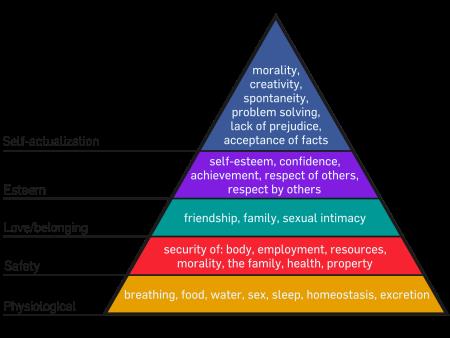
Abraham Maslow, who was a 19th century psychologist, is famous for his theory of motivation (Maslow’s hierarchy of needs). This theory explains that extrinsic motivation is far less meaningful than intrinsic motivation. In this theory he proposed that motivation is broken up into five desires and rated them from basic needs to highly meaningful desires.

Maslow's Hierarchy of Needs and Motivation
Maslow’s Hierarchy of Needs and Motivation

The first of these five and the most basic are physiological needs such as sex, food, water, and sleep. Next is the desire to feel safe from financial, personal and health related dangers. In the middle of Maslow’s hierarchy is the desire for love, belonging, and intimate relationships. Towards the top is the desire for self-esteem, confidence, and respect. The most meaningful and the most impactful motivational factor is the desire for self-actualization. This factor is highly intrinsic and describes our desire as humans to fully understand ourselves.

As a society we focus mainly on the bottom of this pyramid, which creates a sense of complacency to only want basic needs such as food, sex, and money, which decreases our motivation to complete more meaningful tasks. The best way to become more motivated is to change the rewards we link our goals with from these basic needs to the higher desires on the pyramid, such as, a sense of pride, a better understanding of our moral beliefs, and an increase in our talents. Being able to do this is highly dependent on our ability to think positively and see the possible importance of completing tasks, even the mundane ones. For example lets take the task of typing up multiple handwritten files. At first one may create the preconceived mindset that it is a pointless boring task they are only doing it make money. This results in low quality work due to their lack of motivation. On the other hand, a positive thinker may see it as an opportunity to develop his/her typing skills and will most likely enjoy typing up the files, which would cause the quality of work to increase. By incorporating this positive mindset of striving for highly meaningful goals and rewards, we can greatly increase our motivational levels, thus resulting in a more successful and satisfying life.

At D’Arienzo Psychological Group, we offer corporate in house anger management training, anger management therapy and counseling services at our practice, and certified online anger management training that can be found at the following links:

Four Hour Online Anger Management

Eight Hour Online Anger Management 

Managing Anger in the Workplace

Managing Anger in the Workplace

Managing Anger in the Workplace, Written for D’Arienzo Psychological Group by University of North Florida (UNF) Psychology Student and Future Industrial Organizational Psychologist, Brandon Araujo, December 2013. 

Anger is one emotion that everyone experiences in their life, but many people misinterpret the origin of their anger. The majority of individuals will label a situation or a person as the source of their anger; however, this is incorrect and is the base of many anger management issues. Situations or people do not make us angry; what drives this emotion is our own interpretation of those events and people. We make ourselves angry by becoming overwhelmed with our sense of cognitive dissonance.

Cognitive dissonance is the incongruence of our thoughts and expectations in relation to the events of our lives. In other words, when we expect something to happen but it does not we become frustrated. The retail business is a prime example; retail managers tend to set daily sales goals, and when these goals are not reached the managers become angry and frustrated. In turn, the managers direct these emotions towards their employees, even though the underachieved expectation is the actual source of their anger. Misdirection of anger can lead to multiple negative consequences in the workplace, such as, job dissatisfaction, counterproductive behaviors, and an increase in the company’s turnover rate.

Instead of directing anger towards their employees, the managers should analyze the expectations they had set and determine whether or not they were reasonable. If they were reasonable, they should examine why the goals were not met and what they can do in the future to assure that upcoming goals are reached. This type of reaction, in which we analyze and question the reality of our expectations, puts us in control of our anger. With this control we are able to direct our frustration to the actual source and use it as a tool to solve the problem.

Although this type of controlled reaction is ideal, we occasionally let our anger consume our thoughts and actions. This is especially true in a stressful work environment; the more stress that a job puts on an employee, the more likely they will have feelings of frustration and anger that they may direct towards other co-workers. This has a very negative impact on job satisfaction and productivity. Therefore, the ability to properly deal with an angry co-worker is a very important skill to have.

When an employee recognizes that a co-worker is angry and is directing that anger towards others, there are certain actions that the employee should and should not take in order to deal with the situation. The first and most important action they should take is empathizing with the co-worker, try to understand why they are mad in a genuine and compassionate manner; however, it is important not to force them to open up. After learning about why they are mad, the employee should try to help the co-worker gain control over their anger by assessing the reality of their failed expectations as previously stated in the sales goal example. After implementing this, one should provide minor assistance to help accomplish their co-workers newly assessed expectations, as long as doing so does not cause their own stress to increase. This strategy can also be used individually to help control one’s own anger. This type of empathic social-support within the workplace tends to increase job satisfaction and productivity among workers.

At D’Arienzo Psychological Group, we offer online anger management training and classes as well as in house group anger management training at your place of business. We also provide individual anger management counseling and therapy offered by either a licensed clinical social worker, licensed mental health counselor or a licensed clinical psychologist. Please contact us today for services that will be matched to your specific needs.